
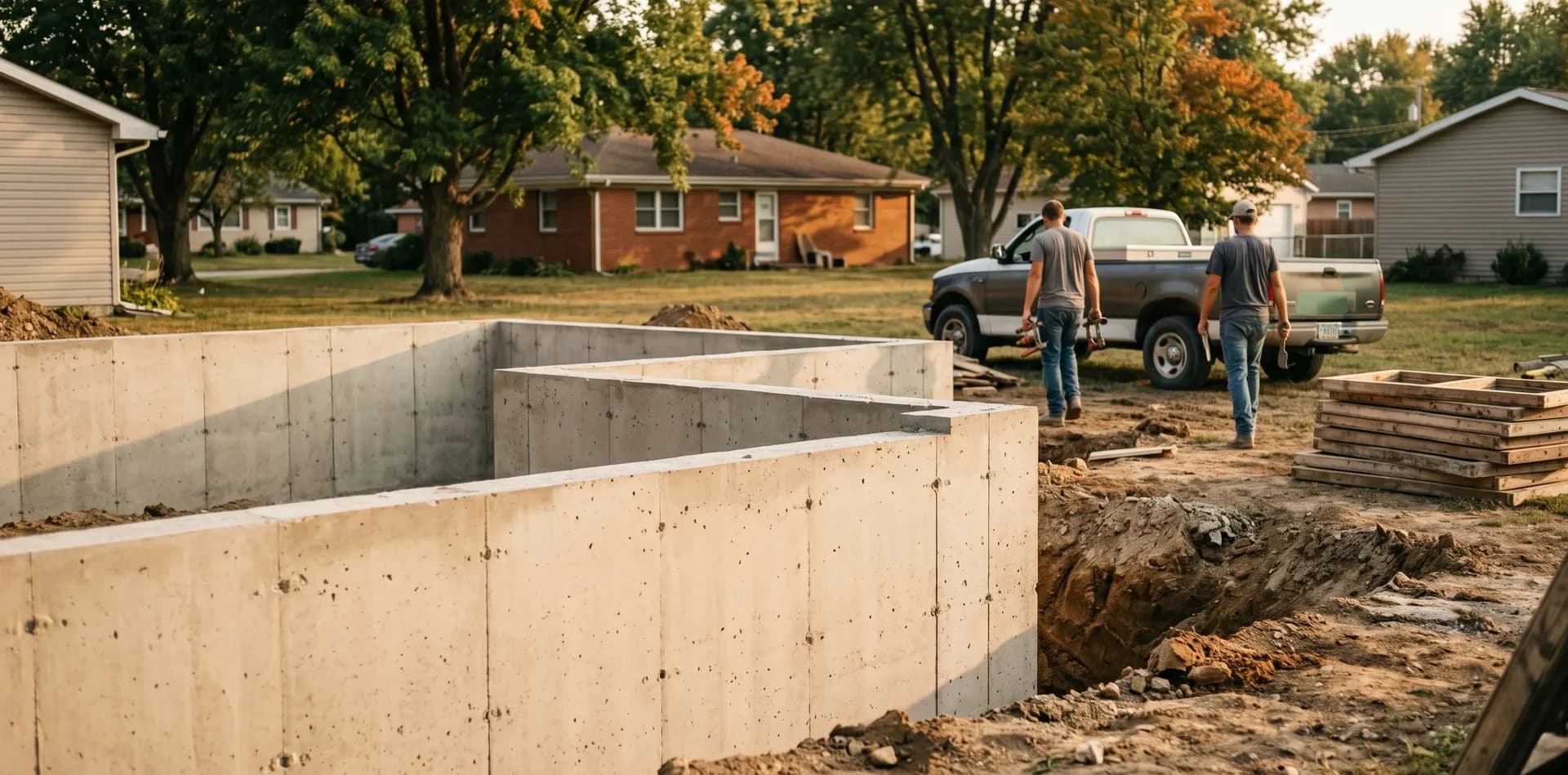
Foundation Walls in Evansville & Newburgh, IN
Poured-in-place foundation walls for basements and below-grade structures.
Professional Foundation Walls Services
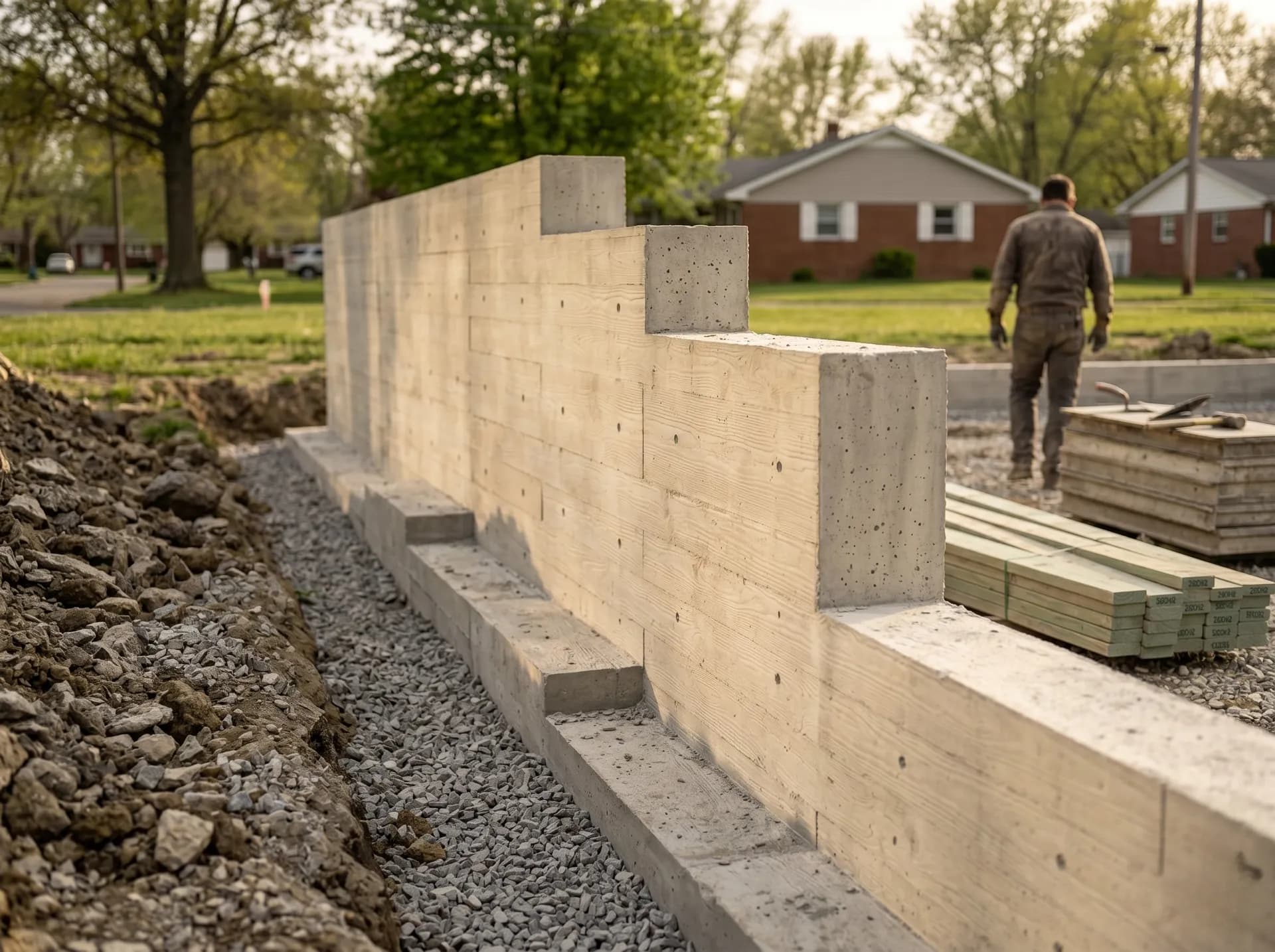
Poured concrete foundation walls provide superior strength, water resistance, and durability compared to block construction. McCaslin Concrete Contractors builds residential and light commercial foundation walls across Evansville, Newburgh, and the Tri-State area for new construction basements, crawl spaces, and below-grade additions. Our walls are formed, reinforced, and poured as monolithic units that resist lateral soil pressure, groundwater infiltration, and the structural loads of the building above.
Our foundation wall process begins with setting precision aluminum or steel forms on the cured footing, placing horizontal and vertical rebar per the structural plan, and installing any required items such as window bucks, beam pockets, pipe sleeves, and anchor bolts before the pour. We use concrete pump trucks for efficient placement and vibrate the mix thoroughly to eliminate voids and honeycombing. After form removal, we apply waterproofing membrane and install drain tile at the footing to manage groundwater.
Poured concrete walls offer significant advantages for southern Indiana's soil and water table conditions. The monolithic pour eliminates the mortar joints that are the weak points in block walls, providing a stronger barrier against water and soil pressure. We tie our walls into the footing with rebar dowels and design the reinforcement to handle the specific earth pressures at your site. For builders and homeowners in the Evansville area, poured foundation walls are the premium choice for below-grade construction.
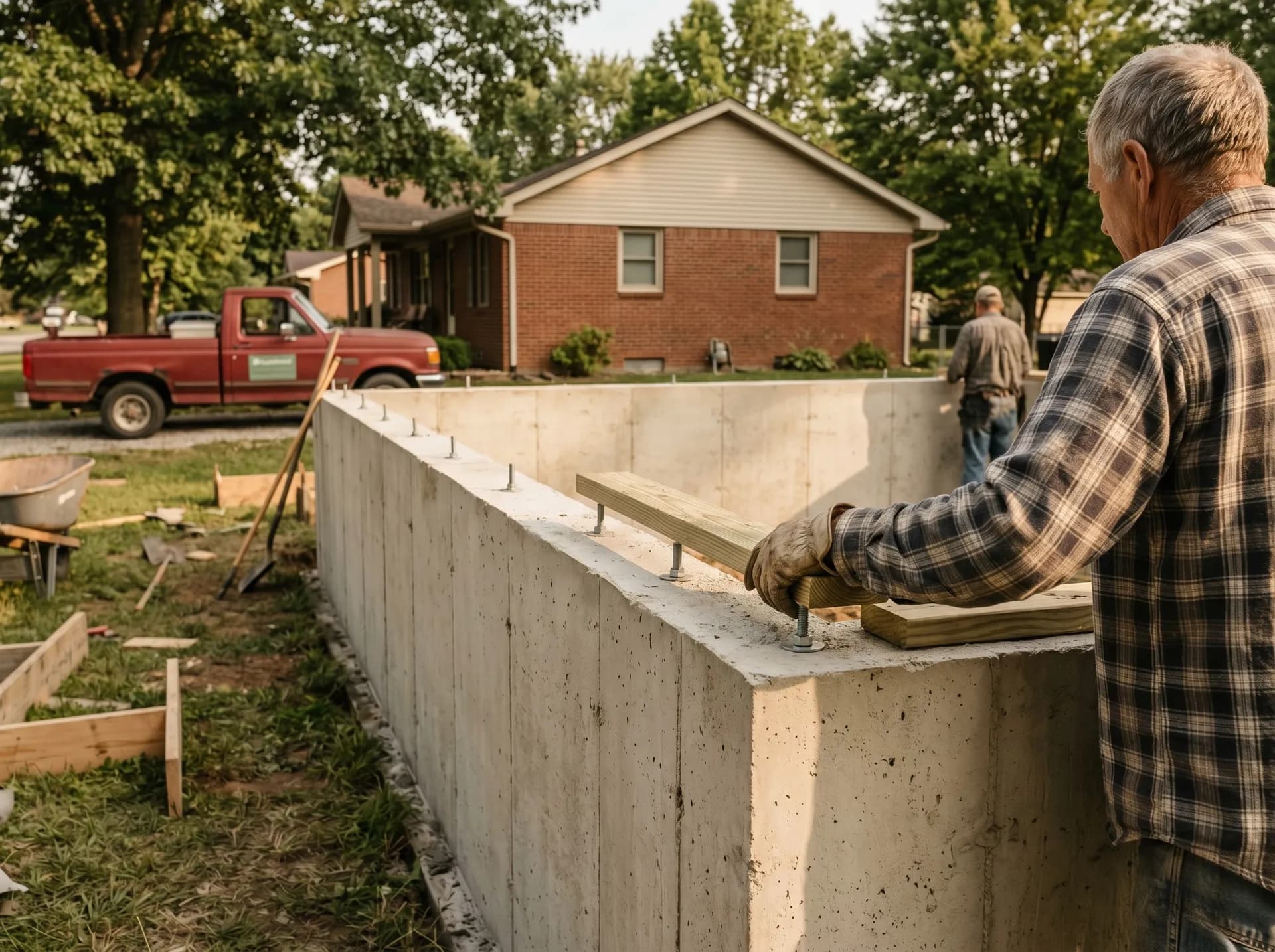
Why Choose Us for Foundation Walls
Superior Water Resistance
Monolithic poured walls have no mortar joints — the primary entry point for water in block foundations. Combined with waterproofing membrane, they keep basements dry.
Greater Structural Strength
Poured concrete walls withstand higher lateral earth pressures than block walls and are better suited to the soil conditions common in southern Indiana.
Integrated Embeds & Details
Window bucks, beam pockets, pipe sleeves, and anchor bolts are installed before the pour for clean, precise integration with framing and mechanical systems.
Faster Construction Schedule
Poured walls can be formed, poured, and stripped in a few days versus the week or more required for block construction, keeping your project timeline moving.
Foundation Walls Projects
Residential basement walls in Evansville, IN
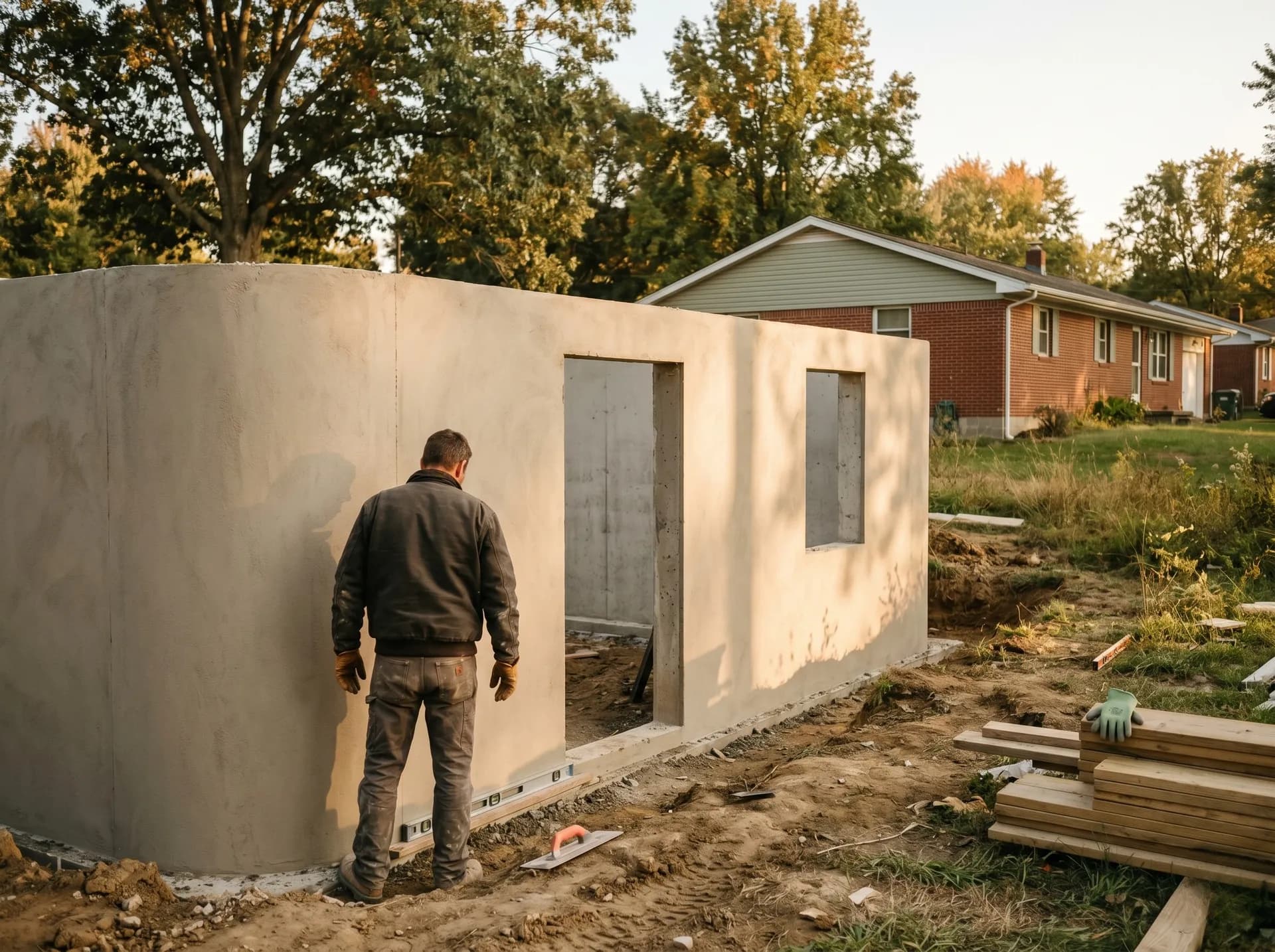
Crawl space foundation walls in Newburgh, IN
Walkout basement wall pour in Warrick County
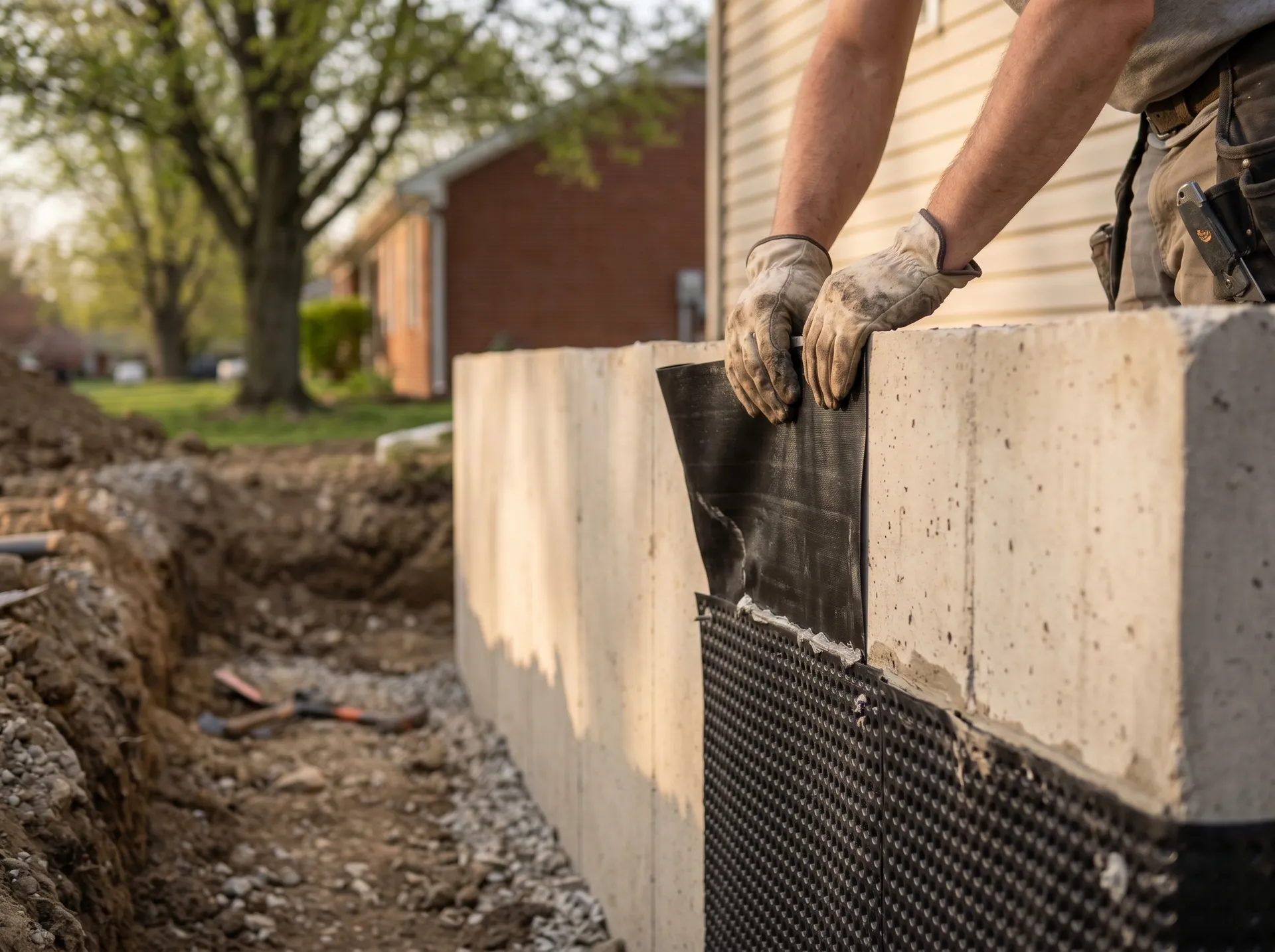
Foundation wall with waterproofing membrane, Vanderburgh County
How We Handle Your Foundation Walls Project
Plan Review & Layout
We review structural plans, verify footing dimensions, and lay out the wall with total station precision for anchor bolt and opening locations.
Form & Reinforce
Aluminum or steel forms are set on the footing, rebar is placed per the structural plan, and all embeds, bucks, and sleeves are installed.
Pour & Consolidate
Concrete is placed via pump truck and vibrated thoroughly to eliminate voids. The top of the wall is leveled and anchor bolts are set to specification.
Strip, Waterproof & Backfill
Forms are removed, waterproofing membrane is applied, drain tile is installed at the footing, and backfill is placed with care to avoid wall damage.
Foundation Walls FAQ
Poured concrete foundation walls are generally stronger, more water-resistant, and faster to build than concrete block (CMU) walls. They have no mortar joints for water to penetrate and can resist higher lateral soil pressures. For Indiana's soil and groundwater conditions, poured walls are the preferred choice for most new construction. The cost is comparable, with poured walls sometimes being slightly more expensive but offering better long-term performance.
Standard residential foundation walls are 8 inches thick. For deeper basements (over 8 feet below grade), higher soil pressures, or heavy building loads, the structural engineer may specify 10 or 12-inch walls. Wall thickness is determined by the retained earth height, soil type, and building loads per the structural design.
We use a three-part approach: the monolithic pour eliminates mortar joints, a spray-applied or sheet waterproofing membrane covers the exterior, and perforated drain tile at the footing collects and diverts groundwater to the sump or daylight. This system provides reliable protection against the water table conditions common in the Evansville and Newburgh area.
Forms are typically stripped 1 to 2 days after the pour. Backfill should wait at least 7 days and ideally until the first floor is framed and in place to brace the walls. Anchor bolts are ready for sill plate installation as soon as forms are removed. We coordinate timing with your builder.
Yes, with proper cold-weather concrete practices. We use heated concrete, insulated blankets over the forms, and adjusted mix designs to ensure proper curing in cold temperatures. Indiana winters require experience with these techniques, and our crew is well-practiced in cold-weather pours throughout the Evansville building season.
You Might Also Need
A Satisfied Client
“McCaslin pours all our foundation walls and they are consistently accurate and on schedule. The anchor bolt placement is always dead-on which makes our framing go faster. Their waterproofing is thorough and we have zero callback issues on basements. Reliable concrete sub, hands down.”
Jason R., Builder, Evansville, IN
Residential Foundation Walls
Get a Free Estimate for Foundation Walls
Tell us about your project and we will provide a detailed, no-obligation quote. Most estimates are delivered within 48 hours.