Warehouse Floors in Evansville & Newburgh, IN
Industrial-grade floors with the flatness tolerances your operations demand.
Warehouse Floors — Built to Specification
Warehouse and distribution center floors face demands that standard concrete cannot meet. Forklift traffic, heavy racking systems, and aisle-width tolerances require a slab that is not just strong but precisely flat and level. McCaslin Concrete Contractors pours industrial warehouse floors across Evansville, Newburgh, and the Tri-State region using laser screeds and robotic total stations to achieve the FF/FL ratings that modern warehouse operations require.
Our warehouse floor process begins with detailed subbase engineering. We work with your engineer and general contractor to verify soil conditions, compaction densities, and vapor emission rates before a single yard of concrete is placed. The subbase preparation is critical — it determines the long-term performance of the slab far more than the surface finish. We install moisture barriers, set reinforcement per the structural plan, and pour high-strength concrete mixes designed for the traffic and load conditions of your facility.
Using laser-guided screeds, we achieve floor flatness and levelness numbers (FF/FL) that meet or exceed project specifications, whether you need a standard warehouse floor or a defined-traffic superflat aisle for narrow-aisle forklifts. Joint locations are coordinated with racking layouts to avoid joints under rack legs where concentrated loads cause spalling. Every warehouse floor we pour in the Evansville area is documented with FF/FL measurements, test cylinder results, and as-built records.
Why Choose Us for Warehouse Floors
Laser Screed Flatness
Our laser-guided screeds deliver the FF/FL numbers required for narrow-aisle forklifts, automated guided vehicles, and high-density racking systems.
Joint-to-Rack Coordination
We coordinate joint placement with racking layouts so that no joints fall under rack legs, preventing the spalling and edge damage that compromises floor performance.
Moisture Vapor Control
We test and address moisture vapor emission rates before pouring, installing barriers and specifying mixes to prevent flooring failures and adhesion issues.
Documented Performance
Every floor is tested and documented with FF/FL measurements, compressive strength results, and as-built records for your project files.
Warehouse Floors Projects
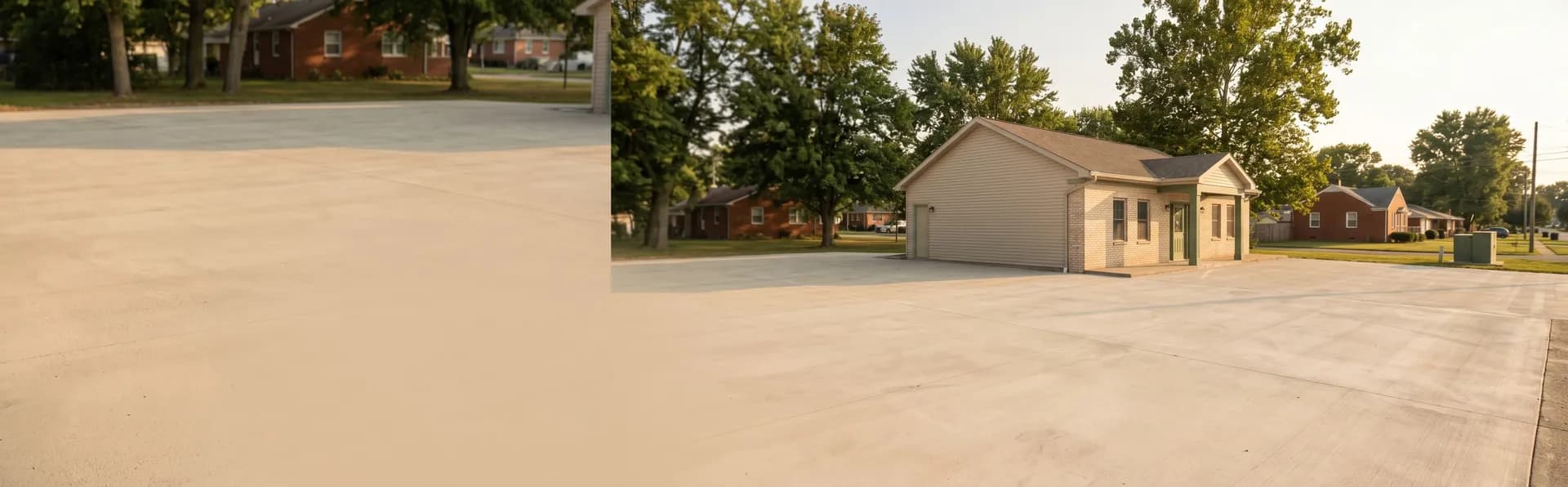
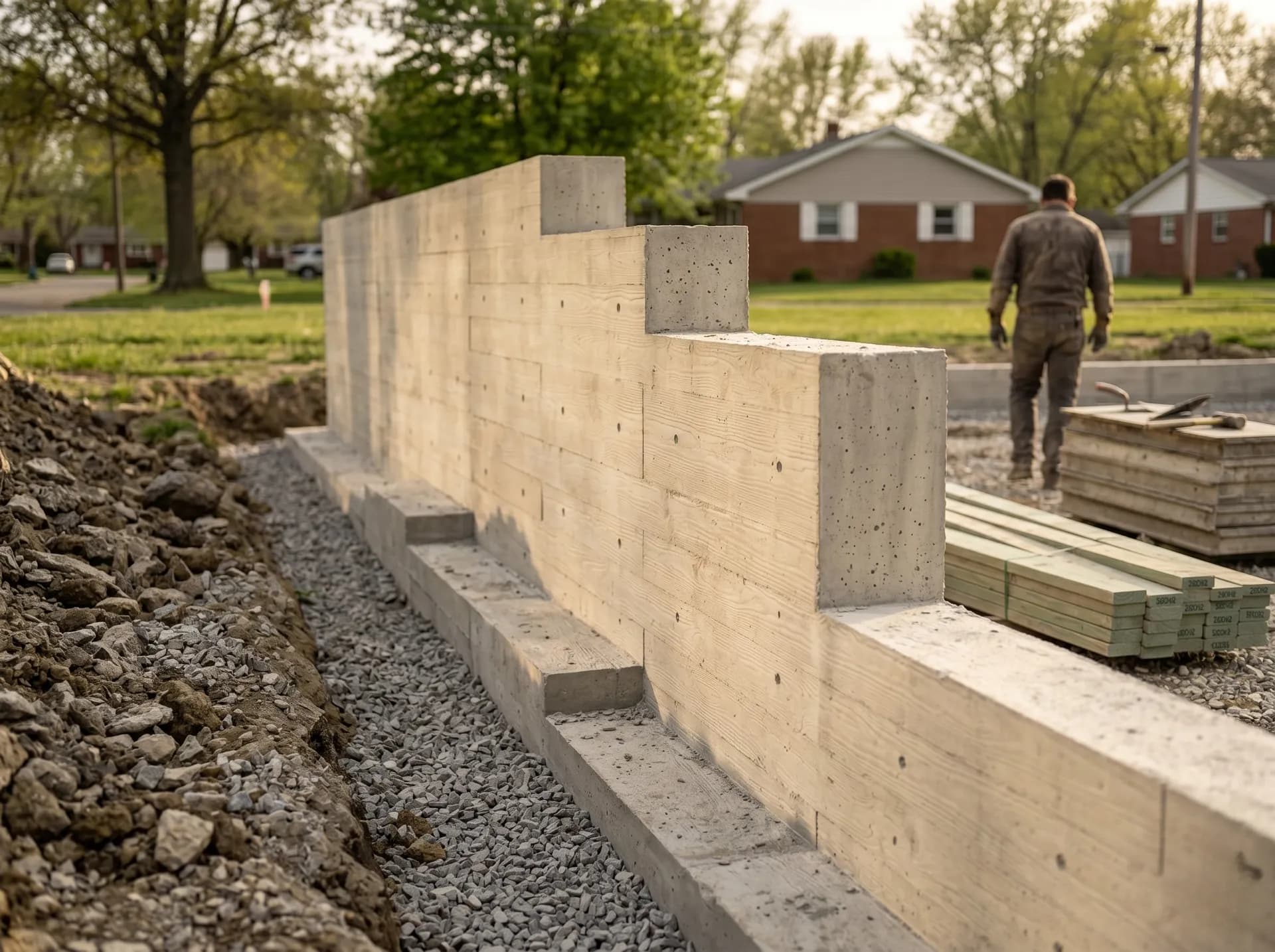
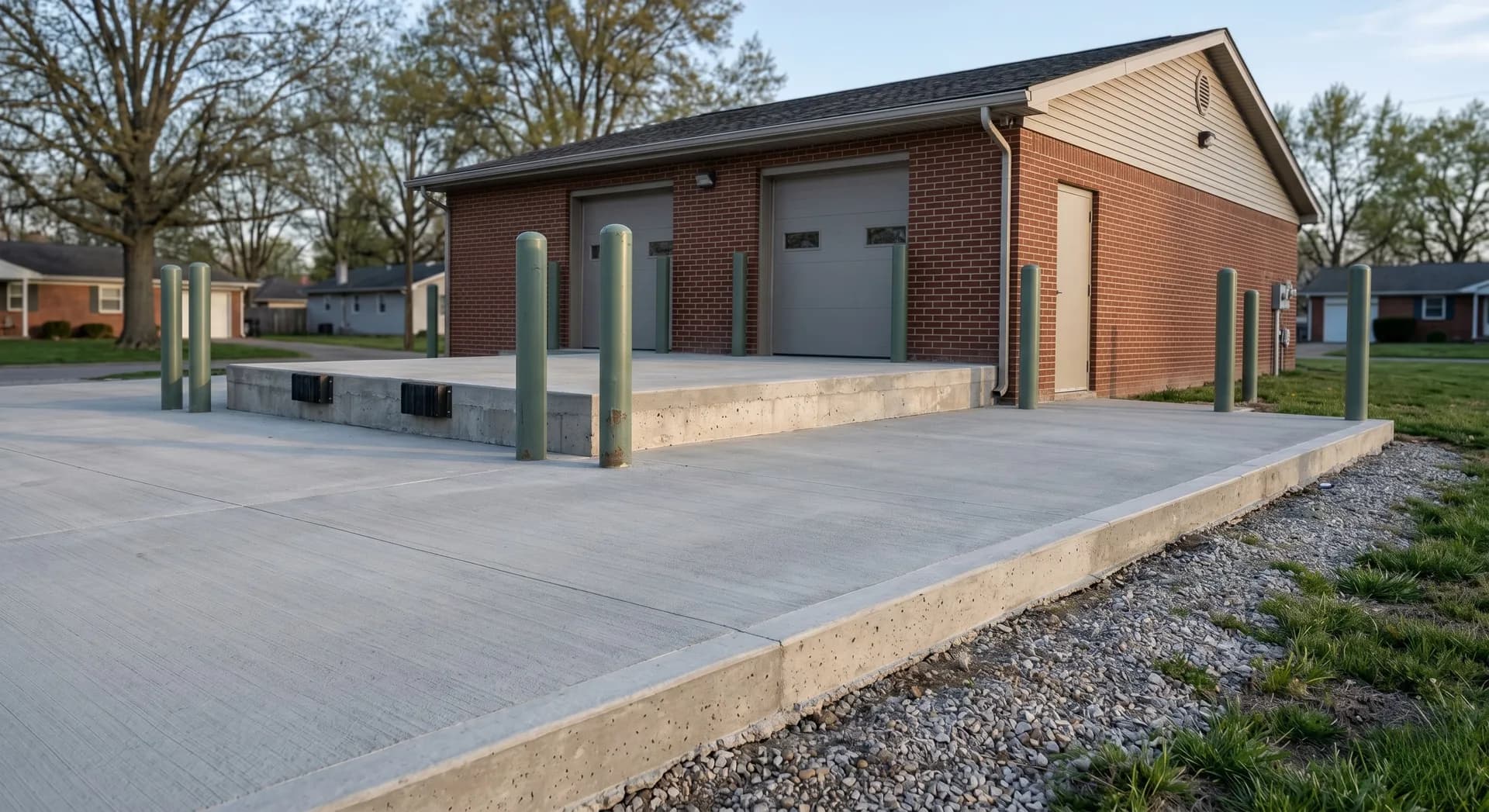
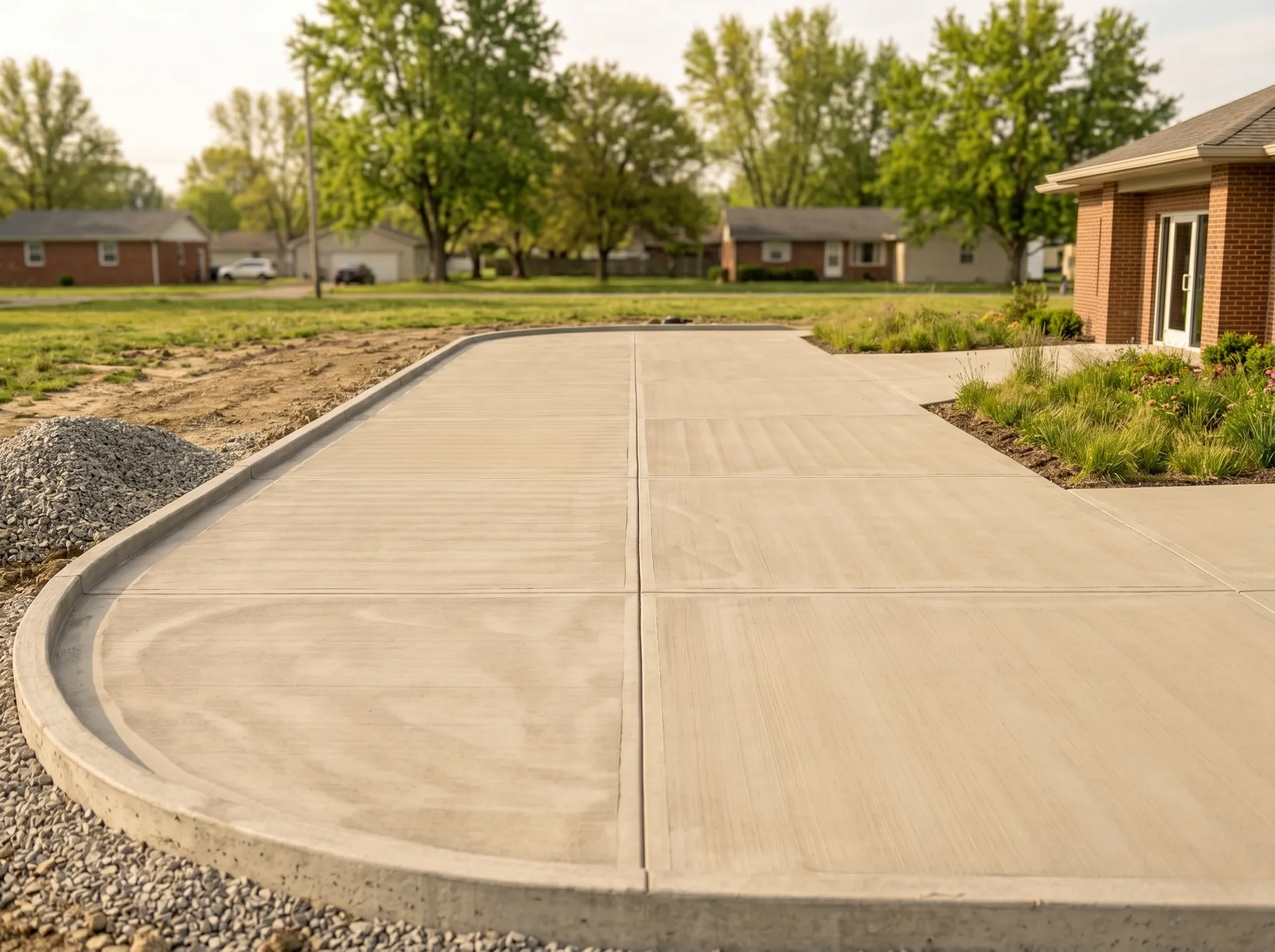
Distribution center floor pour in Warrick County, IN
Laser screed operation at Evansville warehouse
Superflat aisle floor in Newburgh industrial park
Warehouse slab with vapor barrier installation, Evansville
How We Deliver Your Warehouse Floors Project
Engineering Coordination
We review floor specs, racking layouts, and traffic requirements with your engineer to develop the pour plan, joint layout, and FF/FL targets.
Subbase & Vapor Barrier
Subgrade is compacted and tested, aggregate base is placed and verified, and vapor barrier is installed per specification.
Laser Screed Pour
High-strength concrete is placed and struck off with laser screeds for precision flatness. Joints are saw-cut per the racking-coordinated layout.
Testing & Turnover
FF/FL measurements are taken and documented, test cylinders are lab-verified, and we provide complete as-built documentation for project records.
Warehouse Floors FAQ
We regularly achieve FF35/FL25 on standard warehouse floors and can deliver FF50/FL30 or higher for defined-traffic aisles and superflat applications. Our laser screed equipment and experienced finishing crew are capable of meeting the tightest tolerances required by modern racking and automation systems.
Uneven floors cause problems with racking system installation, forklift stability at height, automated guided vehicle navigation, and overall operational efficiency. A warehouse floor that is even slightly out of tolerance can result in racking shimming, equipment wear, and product damage. Getting the floor right from the start saves significant time and cost.
Most warehouse floors are 6 to 8 inches thick with rebar or welded wire reinforcement, depending on load requirements. Heavy-duty distribution centers with high-density racking and heavy forklift traffic may require thicker slabs. Thickness is specified by the structural engineer based on soil conditions and operational loads.
Moisture vapor emission through concrete slabs can damage floor coatings, adhesives, and goods stored at floor level. We test subgrade moisture conditions, install polyethylene vapor barriers per ASTM standards, and specify concrete mixes that minimize vapor transmission. These steps are critical for facilities that will have floor coatings or sealed finishes.
In renovation situations, we can work around existing infrastructure, though it is more complex and slower than open-floor pours. For the best results, we recommend pouring the floor before racking installation. We coordinate with your racking supplier to ensure joint locations and slab conditions meet their installation requirements.
You Might Also Need
A Satisfied Client
“McCaslin poured 25,000 square feet of warehouse floor for our distribution center and hit every FF/FL number the spec required. The racking went in without a single shim. Their coordination with our GC was seamless and the documentation was thorough. First-rate commercial concrete work.”
Dan K., Project Manager, Warrick County, IN
Distribution Center Floor
Get a Free Estimate for Warehouse Floors
Tell us about your project and we will provide a detailed, no-obligation quote. Most estimates are delivered within 48 hours.