
Care Guide
Concrete Care Guide
Keep your investment looking great for decades. Practical tips for Indiana homeowners on cleaning, sealing, and maintaining your concrete.
Year-Round Care for Indiana Concrete
Indiana's climate presents unique challenges for concrete — from humid summers to harsh freeze-thaw cycles in winter. Here's how to protect your investment through every season.
Spring
- Inspect all concrete surfaces for cracks, chips, or frost damage from winter
- Clean away debris, leaves, and dirt that accumulated over the cold months
- Fill small cracks early with a quality concrete crack filler to prevent water infiltration
- Schedule professional repairs for any significant damage before the busy season
Summer
- Pressure wash concrete surfaces to remove stains, mildew, and ground-in dirt
- Treat oil stains with a degreaser — the sooner you address them, the better
- Keep heavy planters and furniture from sitting in one spot too long to prevent discoloration
- Water your concrete during extreme heat waves to prevent rapid moisture loss and surface cracking
Fall
- Apply a high-quality concrete sealer before temperatures drop — this is the most important maintenance step
- Clean surfaces thoroughly before sealing to ensure proper adhesion
- Clear leaves and organic debris regularly to prevent staining and moisture retention
- Ensure proper drainage is working to direct water away from concrete surfaces
Winter
- Avoid rock salt and chemical deicers — they can cause surface scaling and spalling
- Use sand or kitty litter for traction on icy concrete surfaces
- Shovel snow promptly to minimize prolonged moisture exposure on the surface
- Never use a metal shovel blade directly on concrete — use plastic or rubber-edged tools
How to Clean Your Concrete
Regular cleaning is the simplest and most effective way to maintain your concrete surfaces. For routine cleaning, use a garden hose and a stiff-bristle push broom to remove dirt, leaves, and debris. For a deeper clean, a pressure washer at 3,000 PSI or less works well for most residential concrete.
For oil or grease stains, apply a commercial concrete degreaser and scrub with a stiff brush before rinsing. For organic stains like rust, leaf tannins, or mildew, try a solution of oxygen bleach (sodium percarbonate) mixed with warm water. Avoid using muriatic acid or harsh chemical cleaners, as they can etch the surface and damage decorative finishes.
For stamped or decorative concrete, use a gentle approach — a soft brush and pH-neutral cleaner will clean without damaging the color or texture. Always test cleaning solutions on a small, inconspicuous area first.
When and How to Seal Your Concrete
Sealing is the single most important thing you can do to extend the life and appearance of your concrete. A quality sealer creates a barrier against moisture, stains, freeze-thaw damage, and UV fading. We recommend sealing your concrete every 2 to 3 years, depending on traffic and exposure.
The best time to seal is in early fall, when temperatures are between 50 and 80 degrees and no rain is expected for at least 24 hours. Make sure the surface is completely clean and dry before applying sealer. For most driveways and patios, an acrylic-resin sealer provides excellent protection and enhances the appearance of the concrete. For decorative or stamped concrete, a solvent-based acrylic sealer brings out the color and provides a subtle sheen.
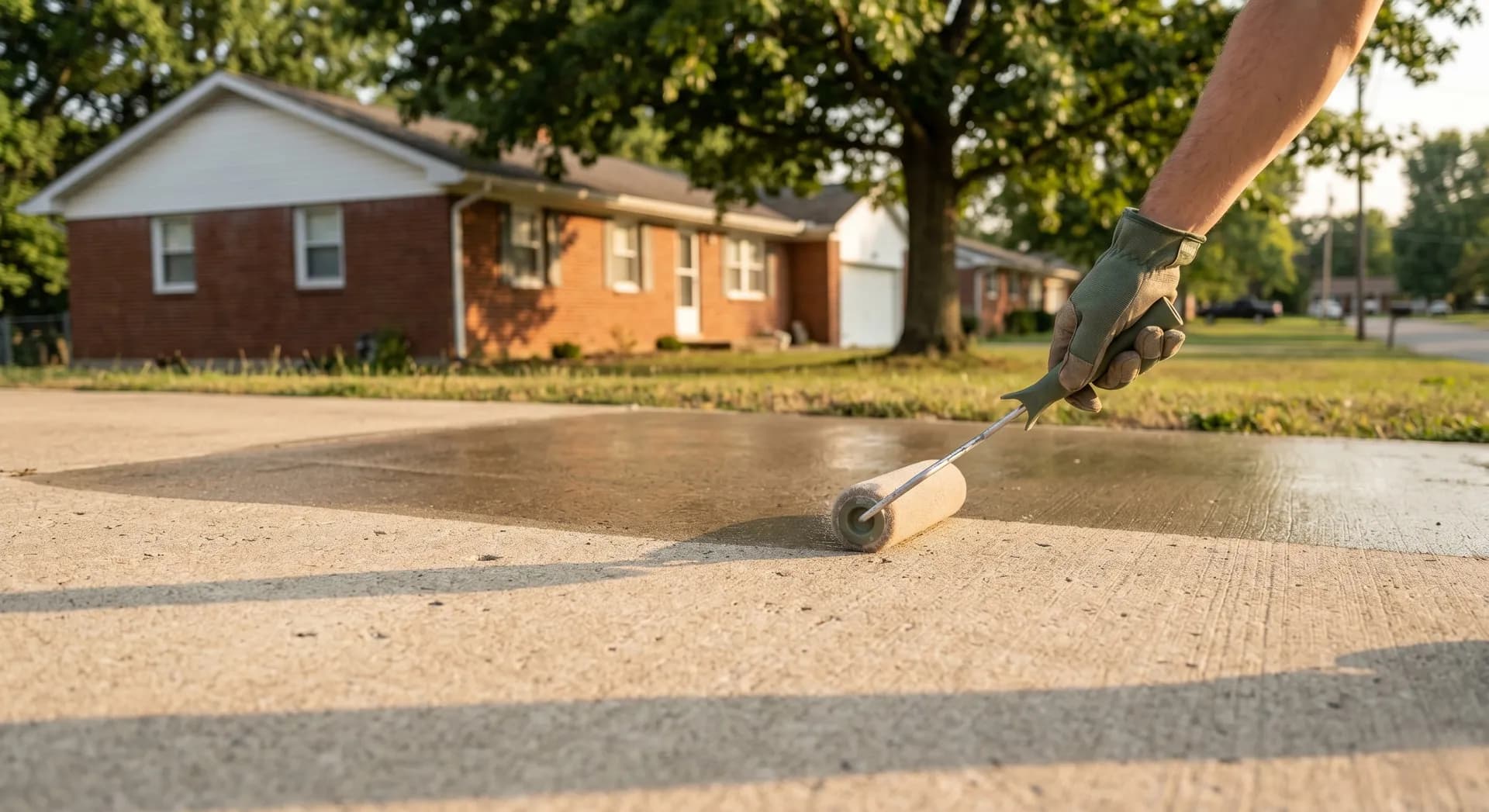
Apply sealer in thin, even coats using a roller or sprayer. Two thin coats are always better than one thick coat. Allow the first coat to dry completely before applying the second. Avoid walking or driving on freshly sealed concrete for at least 24 hours.
Crack Prevention Tips
While hairline cracks are a normal characteristic of concrete and are not structural concerns, there are steps you can take to minimize cracking and keep your concrete in top condition. Proper control joints — which are built into your concrete by our team — give the concrete a place to crack in a controlled, inconspicuous way.
To prevent problems beyond normal shrinkage cracks, ensure proper drainage around your concrete to avoid water pooling and erosion of the subgrade. Avoid driving excessively heavy vehicles on residential concrete that was not designed for heavy loads. Keep tree roots in check, as they can push up and crack concrete from below over time.
If you notice a crack wider than a quarter inch or see sections of concrete shifting or settling unevenly, contact a professional. Our team can assess the issue and recommend the appropriate repair to prevent further damage.
Need Professional Maintenance?
Whether it's a repair, a reseal, or a complete replacement, our team is here to help keep your concrete in top shape.